Ancient Origins
Tracing four family lines through 300,000 years of human history
This deep-time journey follows the genetic and archaeological trail of four family lines: Ursula, Xenia, Oisin and Wodan. It begins with our shared human origins in Africa, follows the migrations and upheavals of prehistory, and ends with the DNA-tested family lines that survive in Britain today.
“I trained as a biochemist. Years spent in laboratories, reading papers, and knowing the difference between what data actually shows and what a headline claims it shows, have shaped how I’ve approached this page as much as my interest in family history has. Genetic genealogy is full of exciting-sounding claims, and it is very easy, with the best intentions, to let a shared haplogroup quietly become “your ancestor”. I have tried hard not to do that here.
What follows is not a new scientific study. It is a documented family history that I have chosen to extend as far back as the evidence honestly allows, using published scientific research, primarily peer-reviewed ancient DNA studies, alongside archaeological findings and fossil evidence, rather than assumption. Four inheritance lines, two carried through mitochondrial DNA and two through the Y chromosome, connect specific, real people in my own family tree to real, dated individuals recovered from the deep past. Wherever the evidence supports it, I have named a genuine branching point in the family’s genetic story. Wherever it doesn’t, I have said so plainly, rather than filling the gap with something that reads better.
I hope that combination, family history held to a scientist’s standard of evidence, makes this page more interesting to read, not less.”
A Note from the Author
Genetic Clues
Both mitochondrial DNA (mtDNA) and the Y chromosome (Y-DNA) have been used extensively by molecular paleoanthropologists in attempts to reconstruct our human lineage and understand these migratory routes. Genetic markers within the mitochondrial genome and on the Y-chromosome are used to trace female and male lines of heredity, respectively. As human populations spread out geographically, they diversified genetically, accumulating mutations that can be measured and used as a molecular clock, offering insight into our evolutionary past. Clustering these mutations produces 'haplogroups', branches of a genetic family tree whose members share a common ancestor along that particular paternal or maternal line. Geneticists use these haplogroup distributions to trace significant events in human prehistory, and, in many cases, to work out where and when a particular haplogroup first arose.
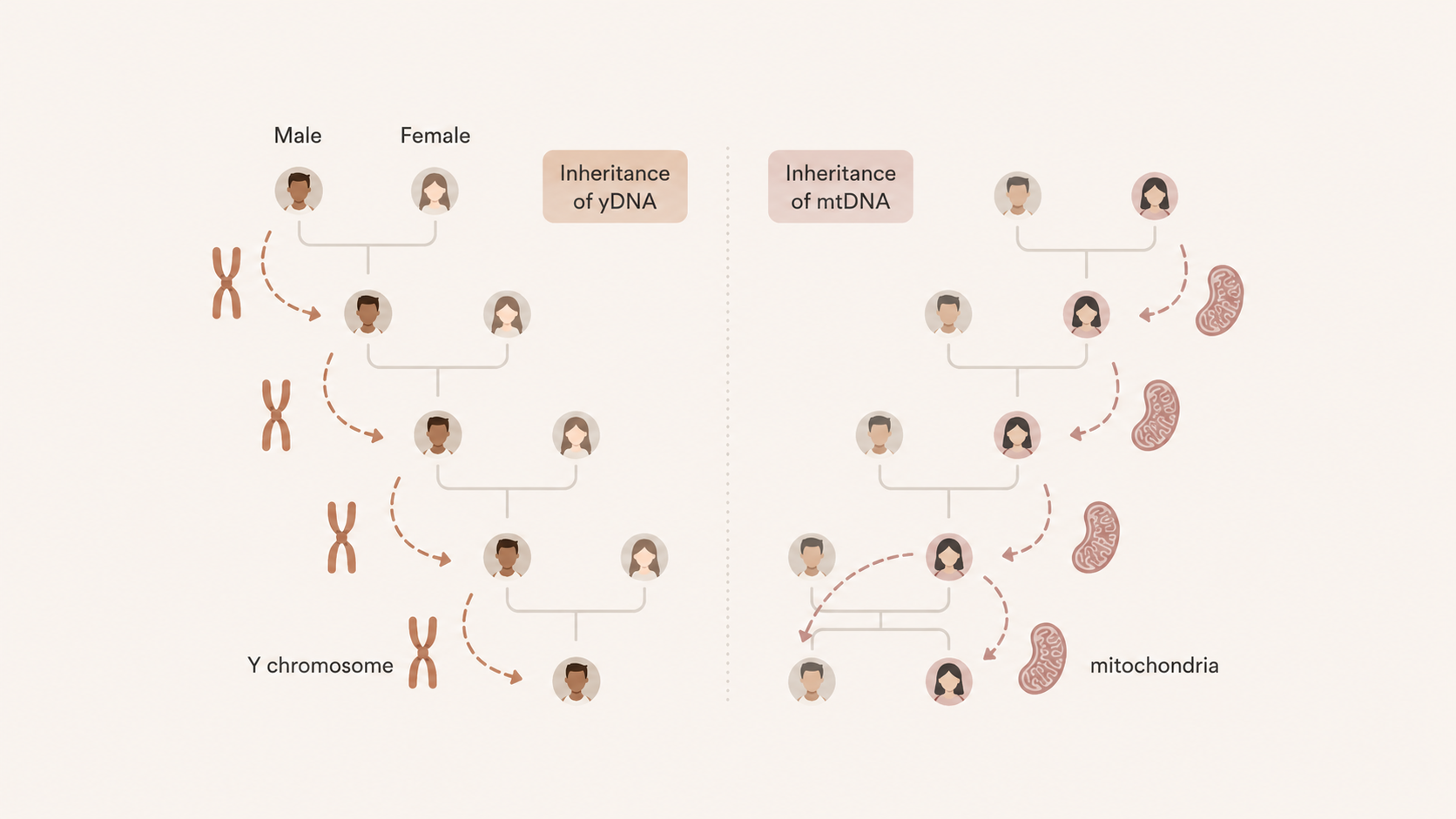
Inheritance of Y-DNA and mtDNA. The Y chromosome is passed from father to son along the direct paternal line, so only males inherit and transmit Y-DNA. Mitochondrial DNA (mtDNA) is passed from mother to all her children along the direct maternal line, but only daughters pass it on to the next generation. These two inheritance patterns allow paternal and maternal genetic lineages to be traced through time.
These two single lines can only tell us so much. Mitochondrial DNA comes from the mother and is passed to all her children, while the Y chromosome passes from father to son. Mutations accumulating along each line provide the markers from which new maternal and paternal branches can be identified. Out of the enormous, branching web of ancestors each of us has, these are just two threads. Going back only four generations, a person has sixteen great-great-grandparents, but only one of them, the woman at the head of the unbroken direct female line, passes on mtDNA, and only one, the man at the head of the unbroken direct male line, passes on Y-DNA. The other fourteen contribute neither of these two specific unbroken markers to that descendant, however close the relationship. Their contribution instead survives, if it survives at all, in autosomal DNA, the DNA inherited from all ancestral lines combined and reshuffled at random each generation. Autosomal DNA is what genetic-genealogy matching and ancestry-composition estimates rely on, and it can trace real relationships for several generations, but each generation roughly halves any one ancestor's expected share of it, so within a handful of generations that ancestor's own contribution becomes too small and too diluted to reliably detect or attribute to them specifically, even though, in principle, some fragment of their DNA may still be there. Going back ten generations, the same pattern holds across just over a thousand ancestors, and all but two of that thousand contribute neither of these two specific unbroken markers, mtDNA or Y-DNA.
The patterns these two lines reveal aren't neutral, either. Across much of prehistory, many societies were patrilocal, meaning women more often moved to live with their partner's community than the other way round, so Y-DNA lineages in the archaeological record tend to look more geographically settled and traceable over long stretches, while mtDNA often shows more movement and mixing between neighbouring groups. This isn't because women travelled further in any absolute sense, but because of where men and women more often lived out their adult lives, which shaped what each kind of DNA left behind, a pattern seen clearly in some ancient migrations, though this pattern doesn't always hold over time. Each is a single, real, unbroken thread pulled out of a vastly larger fabric, not a stand-in for the whole of it.
Meet the Four Lines

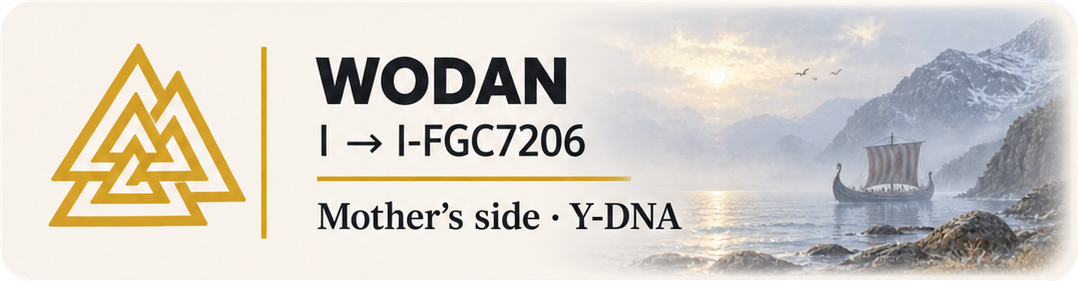
Four genetic lines carry the story through this page: Ursula, Xenia, Oisin and Wodan. They aren't historical figures; no personal name survives for the vast majority of the past 300,000 years. They are names used here for four unbroken lines of inheritance identified through DNA testing in my family, two carried through mitochondrial DNA and two through the Y chromosome.
Rather than inventing labels for my own family's four lines, I've used names drawn from established naming conventions in genetic genealogy, each attached here to a specific genetic marker confirmed in my family's test results. Their precise genetic markers, U5a1a1, X2c, R-FGC10125 and I-FGC7206, provide the present-day anchors from which the story is traced backwards through published ancient DNA, archaeology and documented genealogy.
The names make those long genetic histories easier to follow, while the Evidence Guide sets out tancient samples, branch assignments and research behind each line in detail.
Lines Through Time
The four tested family lines sit within much older maternal and paternal genetic trees. Each branch represents a mutation inherited along a single line of descent, allowing the route from deep ancestral haplogroups to the family’s present-day markers to be followed through time.
-
![]()
Paternal Haplogroup
OISIN · R-FGC10125 | WODAN · I-FGC7206
Tracing the Y-chromosome branches that lead from the deeper paternal tree to the two family lines identified here, with named waypoints marking key ancestral and ancient DNA branches used throughout the Ancient Origins story. -
![]()
Maternal Haplogroups
URSULA · U5a1a1 | XENIA · X2c
Tracing the mitochondrial DNA branches that lead from the deeper maternal tree to the two family lines identified here, with named waypoints marking key ancestral and ancient DNA branches used throughout the Ancient Origins story.
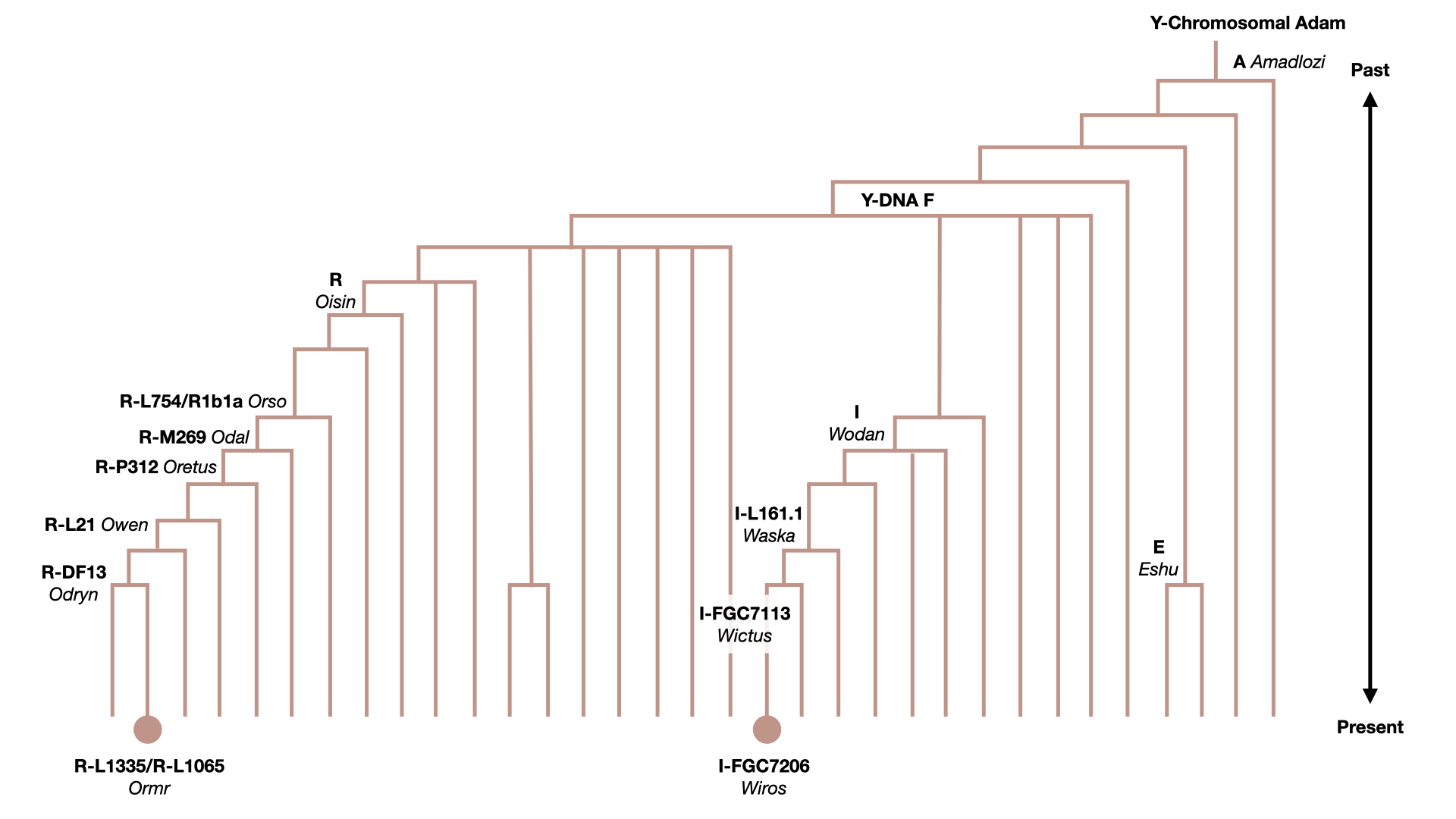
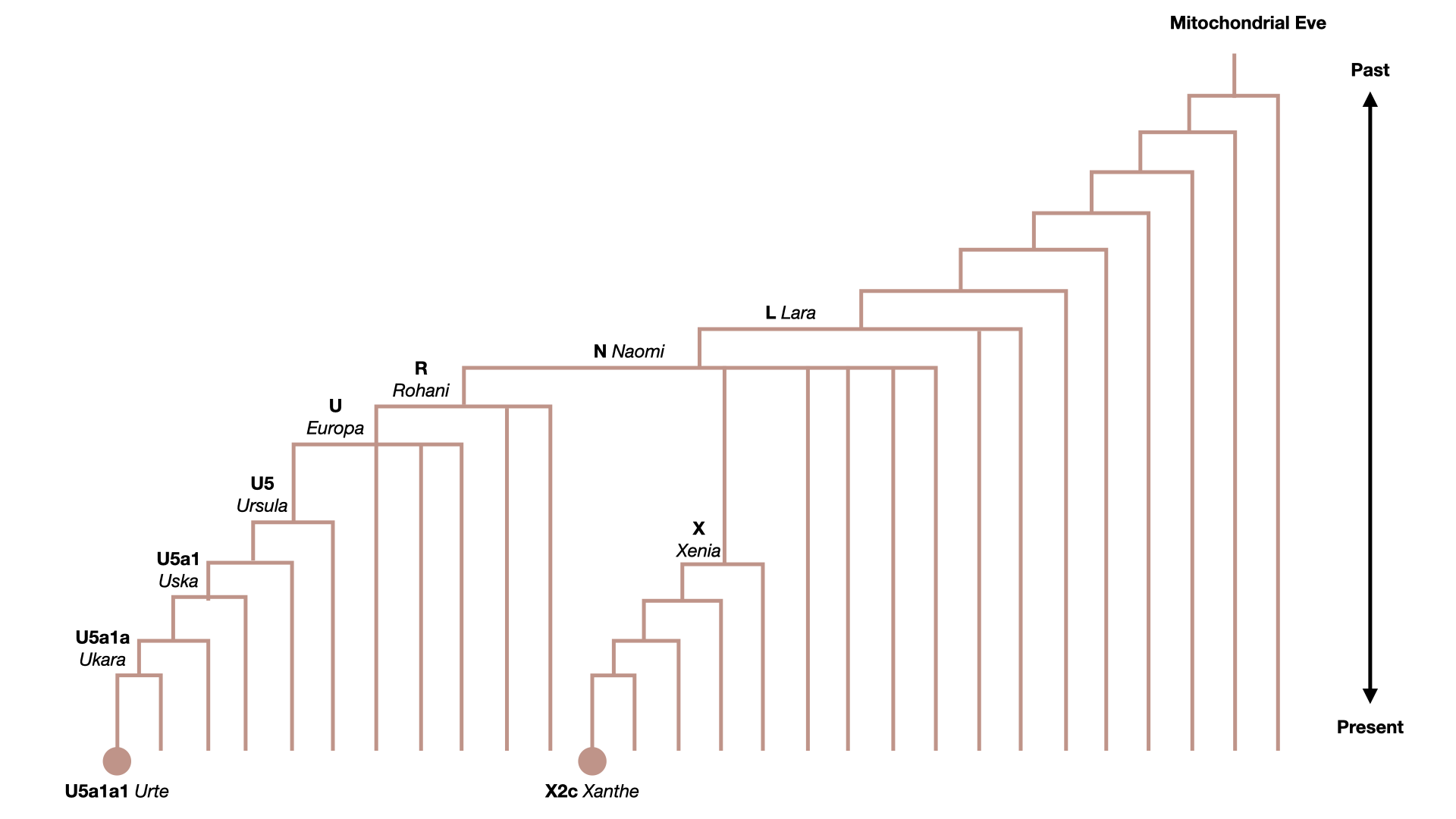
These diagrams show the genetic routes followed through Ancient Origins. The underlying ancient DNA samples, branch assignments, dates and research used to reconstruct them are set out separately in the Evidence Guide.
From Genetic Branch to Family Line
Each genetic line can be followed forward into a documented family line, connecting the tested result to named ancestors in the recent past. The generations shown here are drawn from the fuller documentary research set out under Family Trees, with several individuals explored in more depth in the Lives Remembered series of ancestor biographies.
After years of research, analysis, comparison and refinement, the four family lines are now anchored as securely as the evidence allows. From here, the story moves into the human past, following those lineages through migration, survival, settlement and change.
A Map of Deep Time
The five eras of Ancient Origins overlap with archaeological periods that were never neat or universal.
The narrative has been condensed into five eras: Out of Africa, The Ice Age World, Britain Before Farming, Steppe and Bronze Age Europe, and Rome to Present Day, to help the reader follow the journey through such a long and uneven stretch of time. This chart sets them alongside the finer detail beneath them: the archaeological periods that fall within and across each era, with a short description for each, and the technological milestones tracing human development from the earliest weapons to complex language and writing. Colour coding runs consistently across all three, so an era, a period and a milestone from the same stretch of time can be read together at a glance.
The dates are approximate, and the same term can begin or end at different times in different regions.
The periods and milestones shown here are the ones a reader is most likely to find unfamiliar, the deep and middle prehistory that gives Ancient Origins its scale. The history, culture and detail of later, more familiar periods, including Roman Britain and the Viking world, are covered in their own chapters instead.
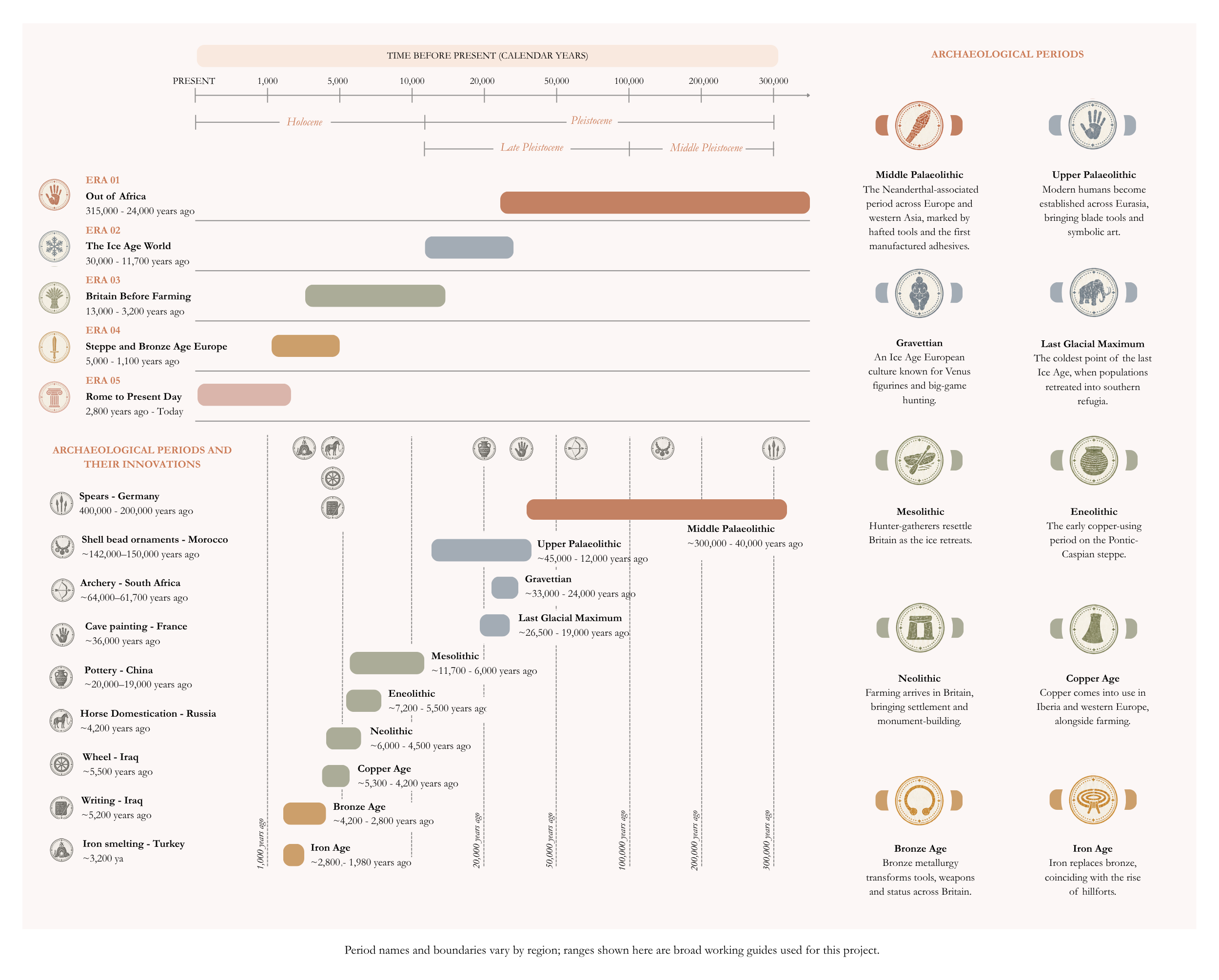
Four family lines have been tested in the present day, documented back through the past two to three centuries, and traced further still through ancient DNA and haplogroup evidence reaching tens of thousands of years into the past. The evidence behind them is set out in full in the Evidence Guide, and the framework above places that evidence in time. What remains is the story itself.
Start the Journey
Travel through five eras of human history, following four family lines through migration, survival, settlement and change.
ERA 01
Out of Africa
315,000 - 24,000 years ago
From the earliest traces of our species in Africa to the first small groups who crossed into Europe, this era begins at the common human root shared by all four of our lines.
ERA 02
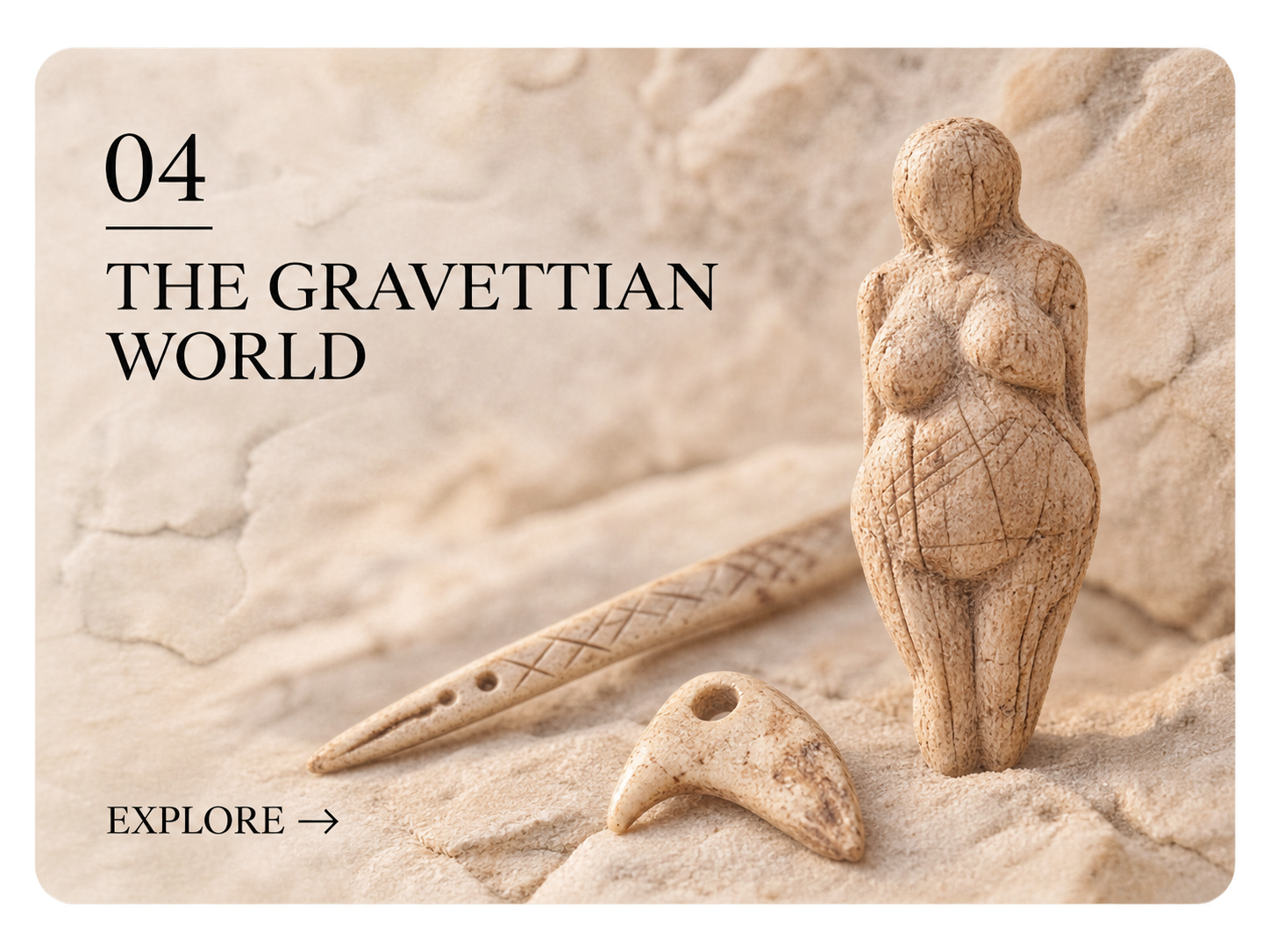
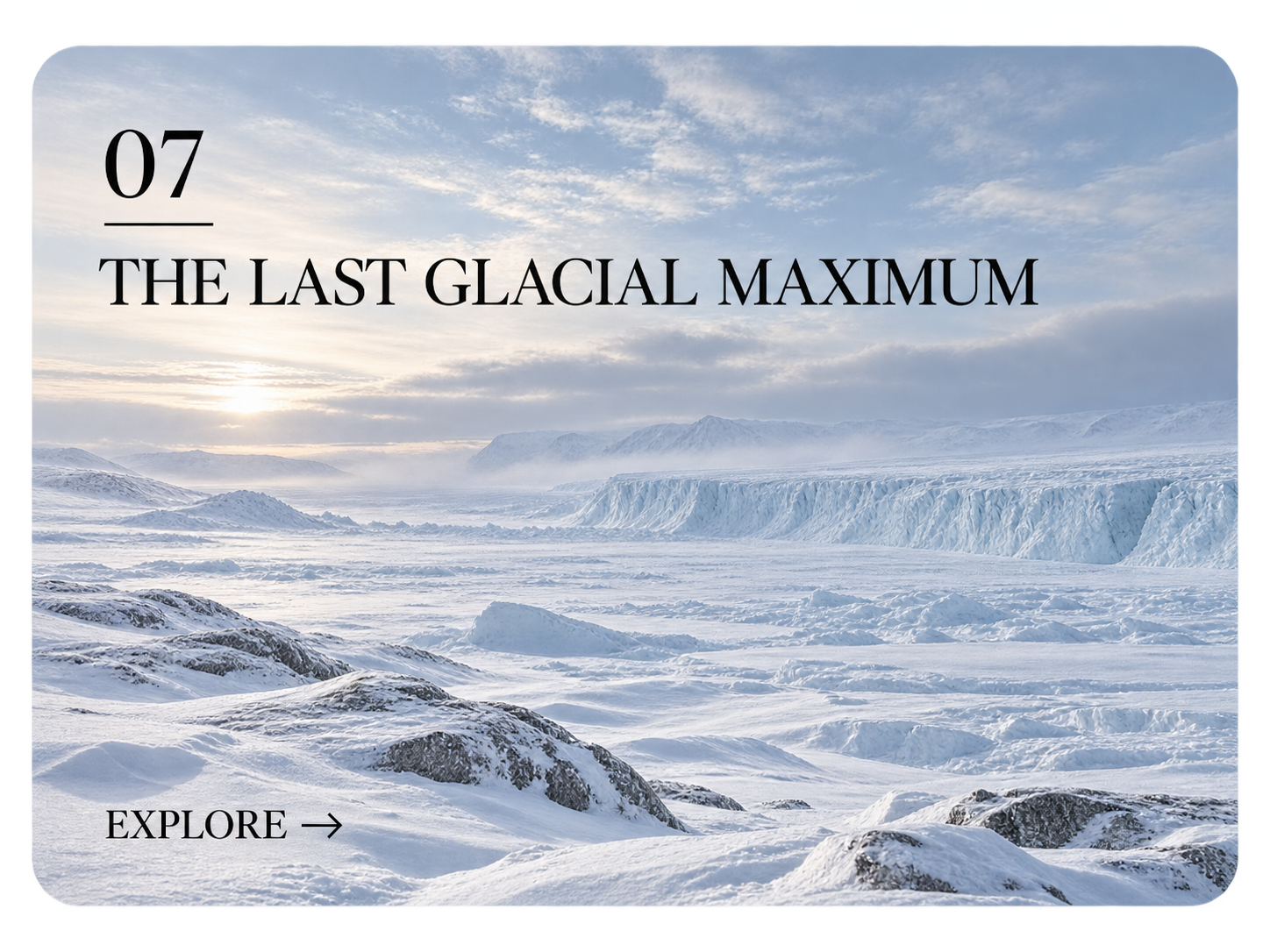
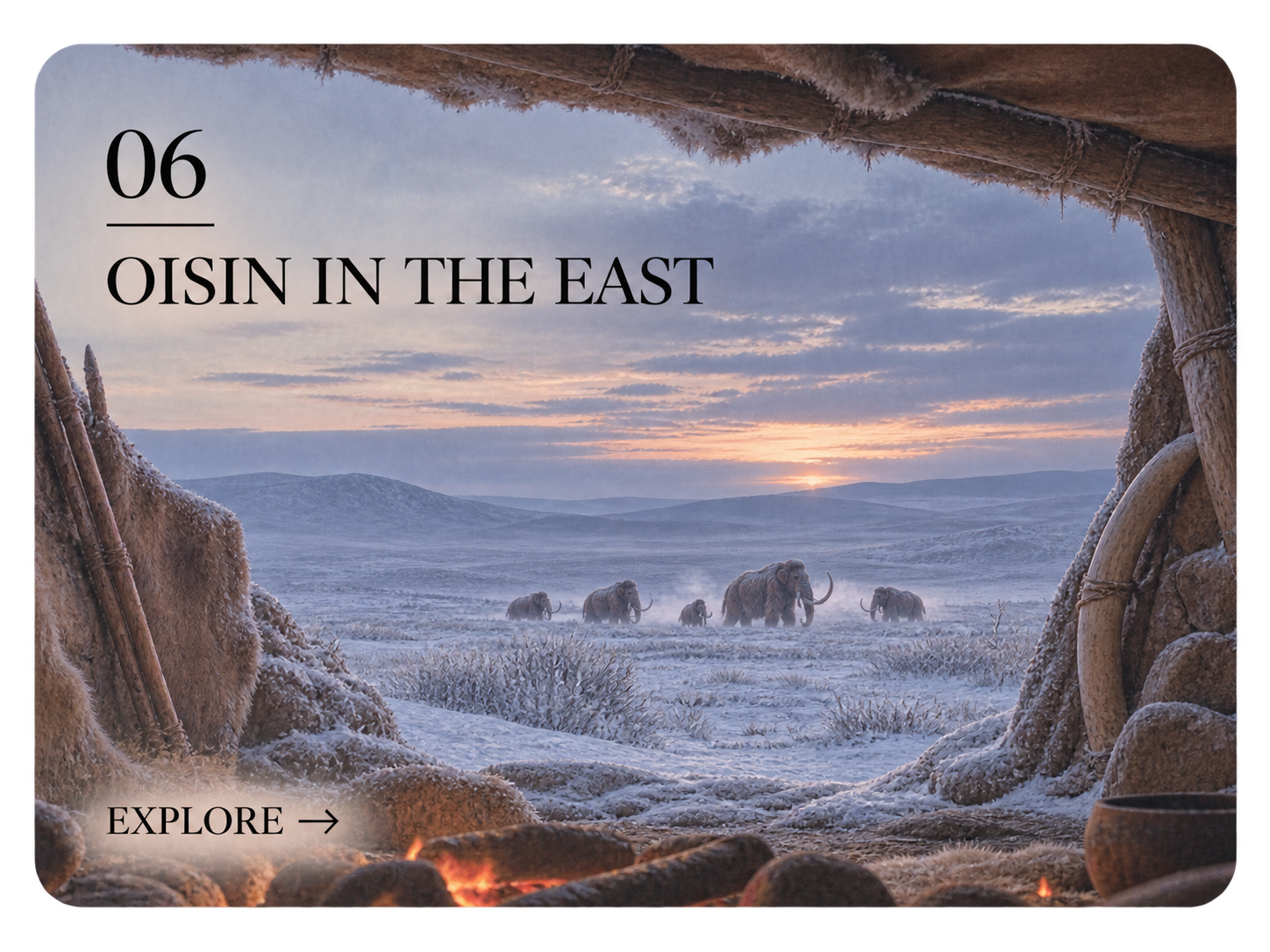
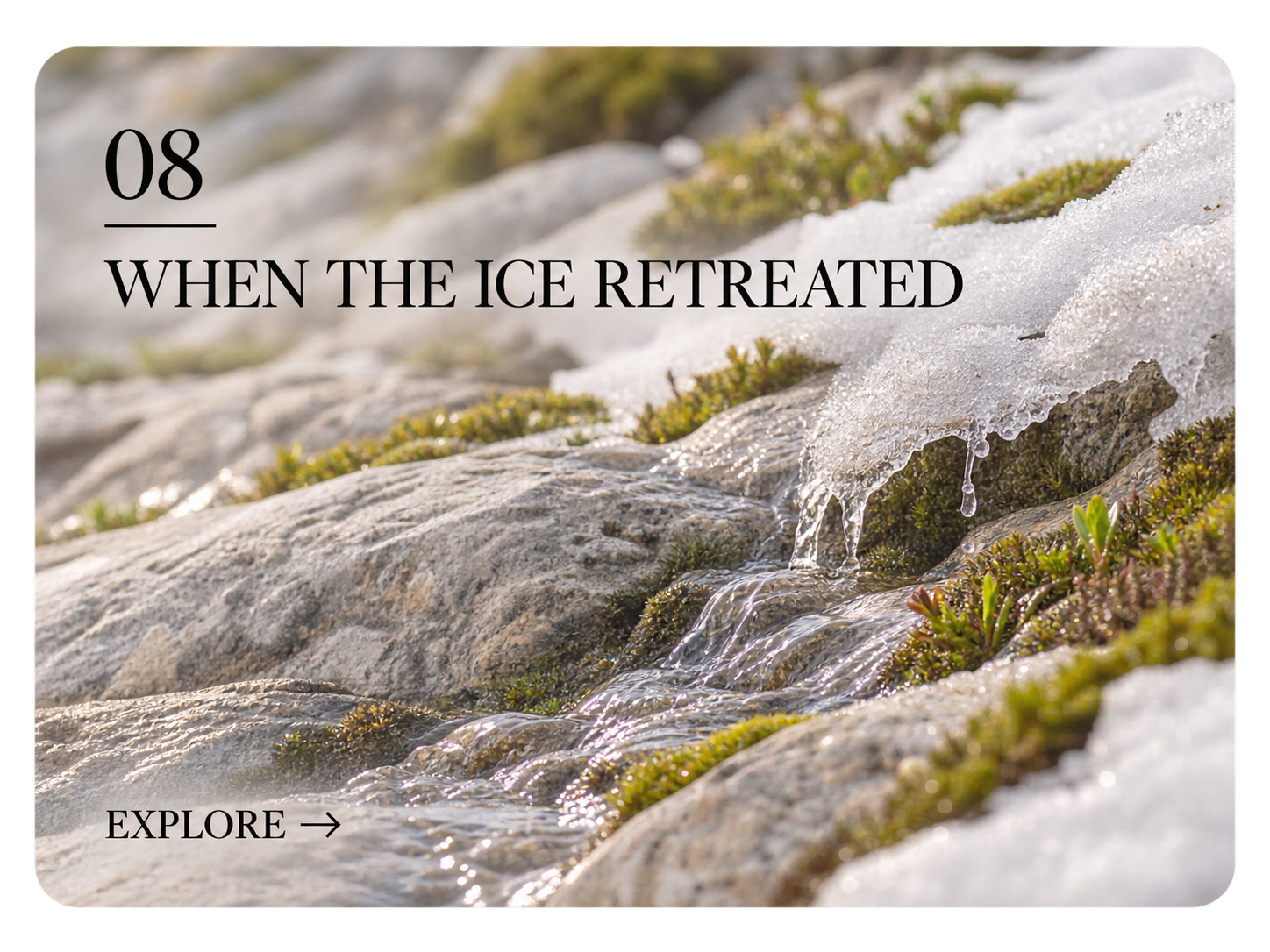
The Ice Age World
30,000 - 11,700 years ago
From the depths of the last Ice Age to the retreat of the ice thousands of years later, this era follows the people who endured the coldest millennia Europe has ever known.

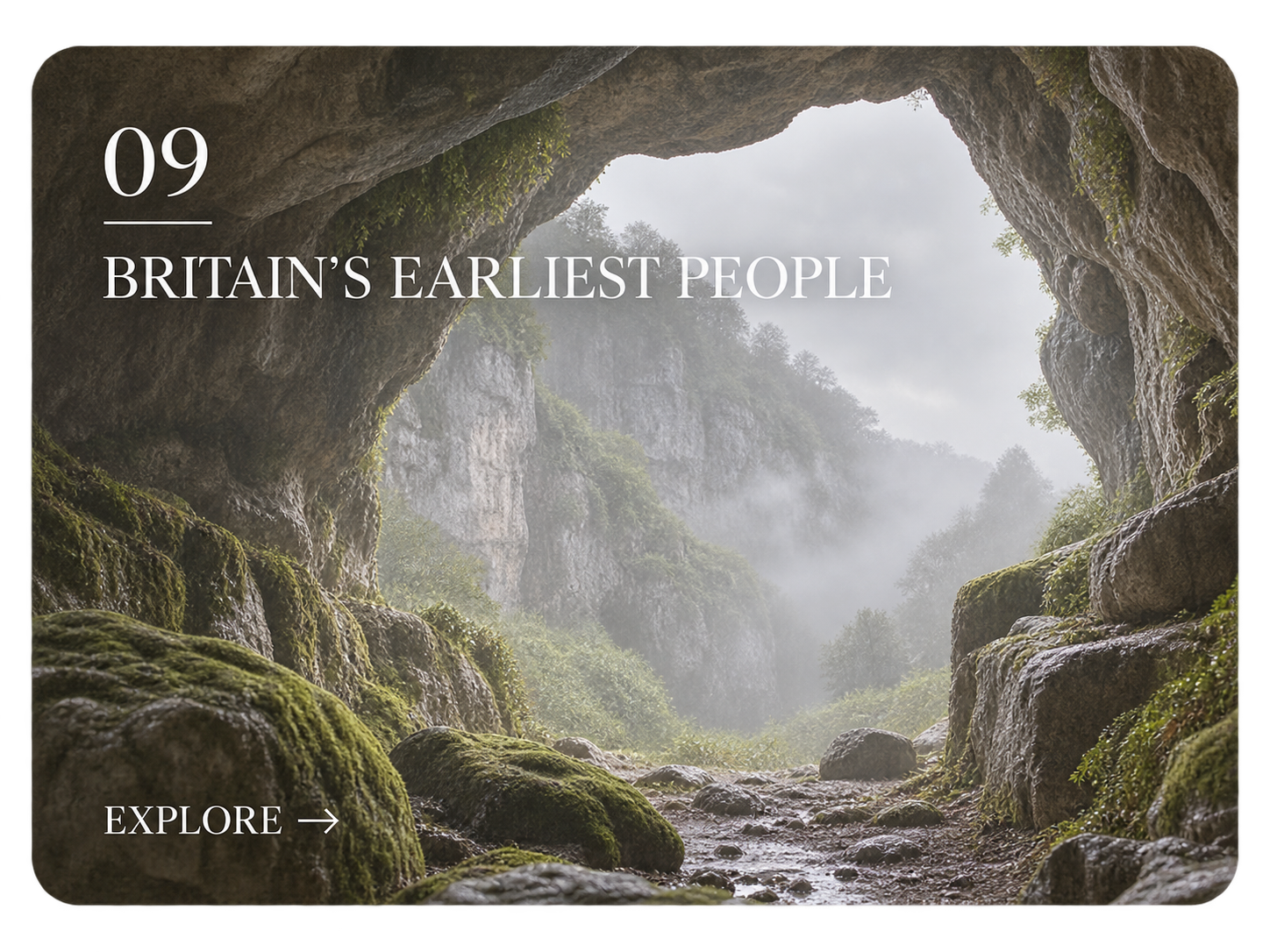
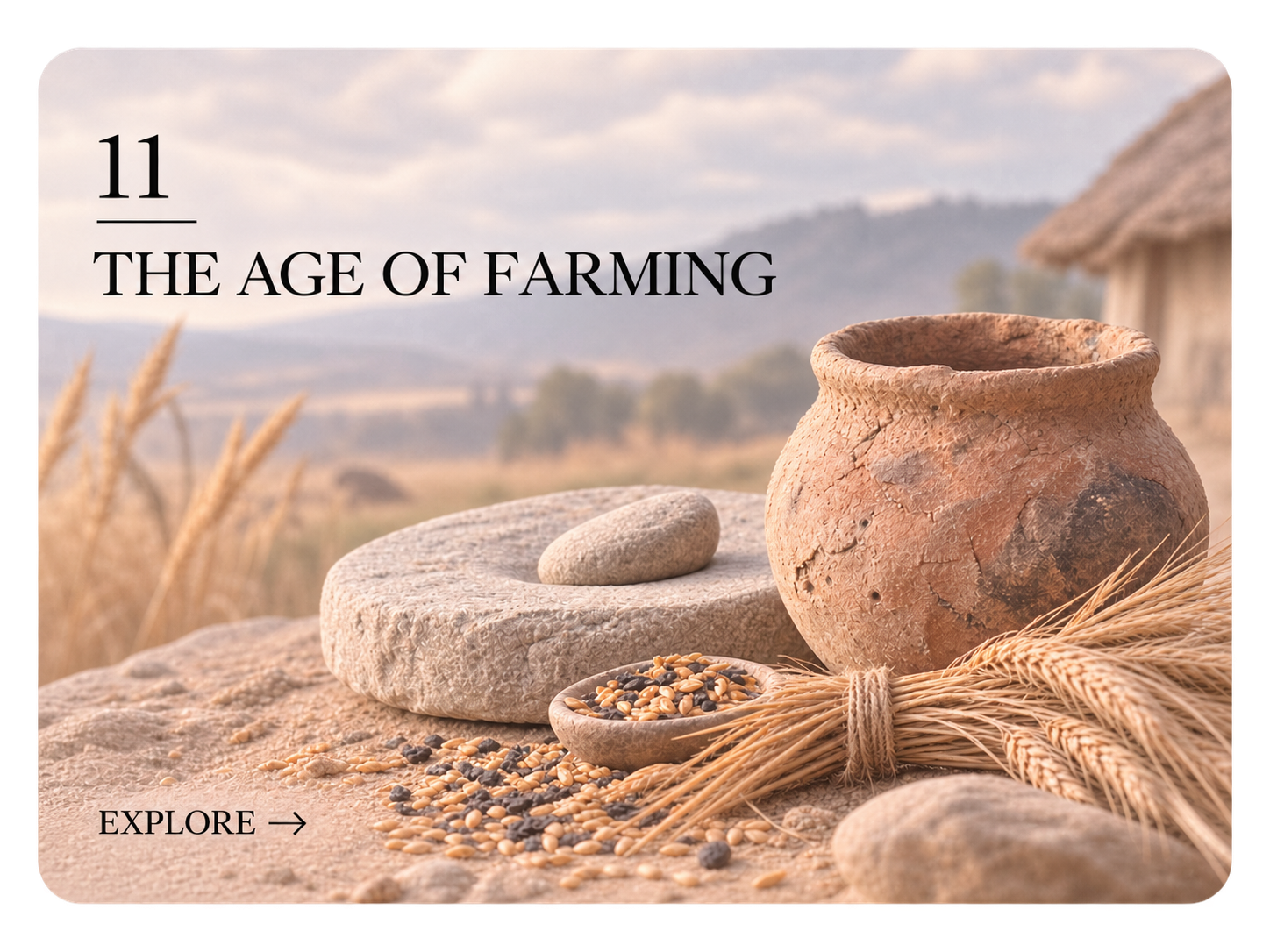
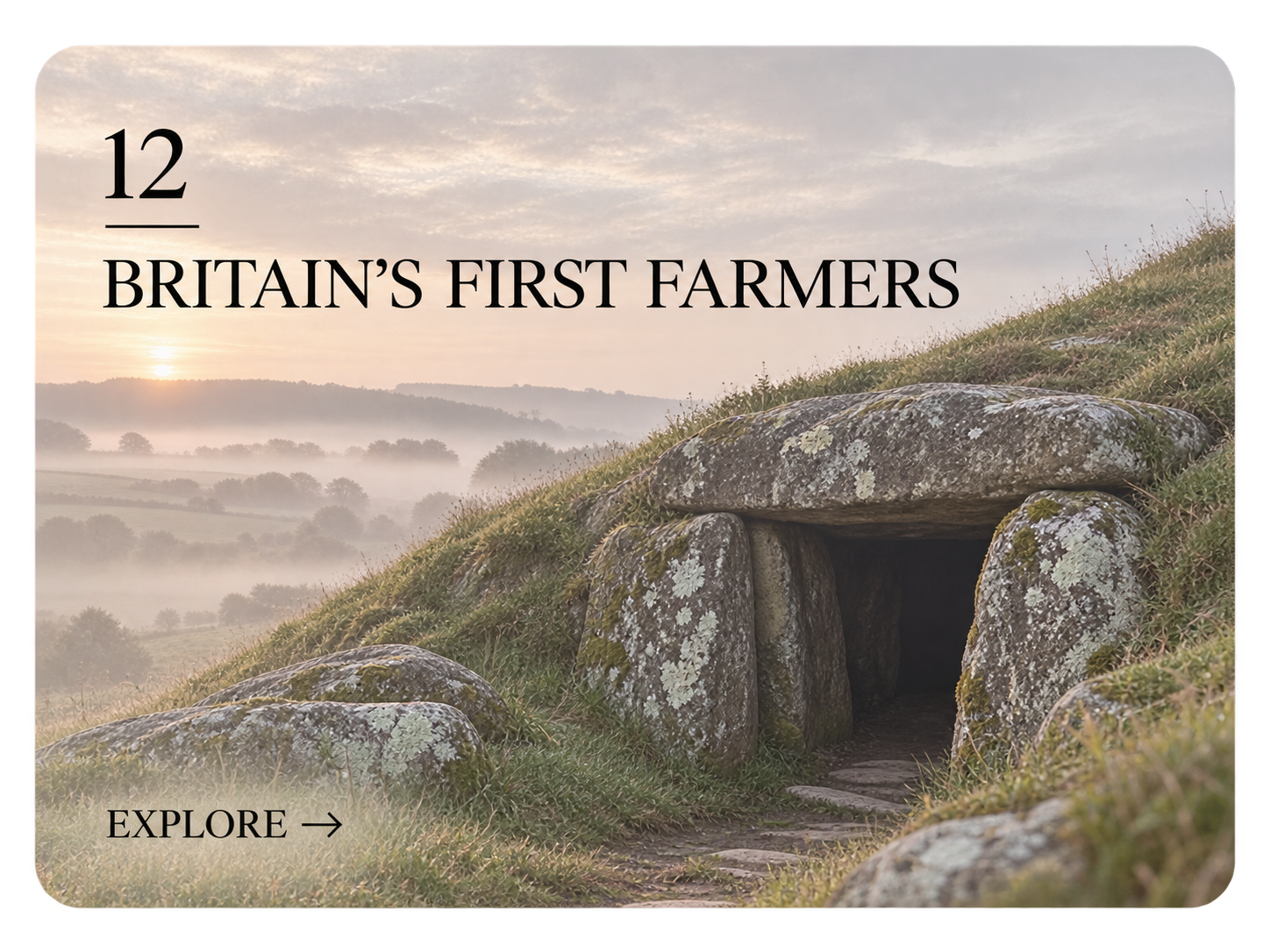
ERA 03
Britain Before Farming
13,000 - 3,200 years ago
From the first people returning to Britain as the ice retreated to the arrival of farming that would change the island for good, this era follows the return of human life to a landscape long empty of it.

ERA 04
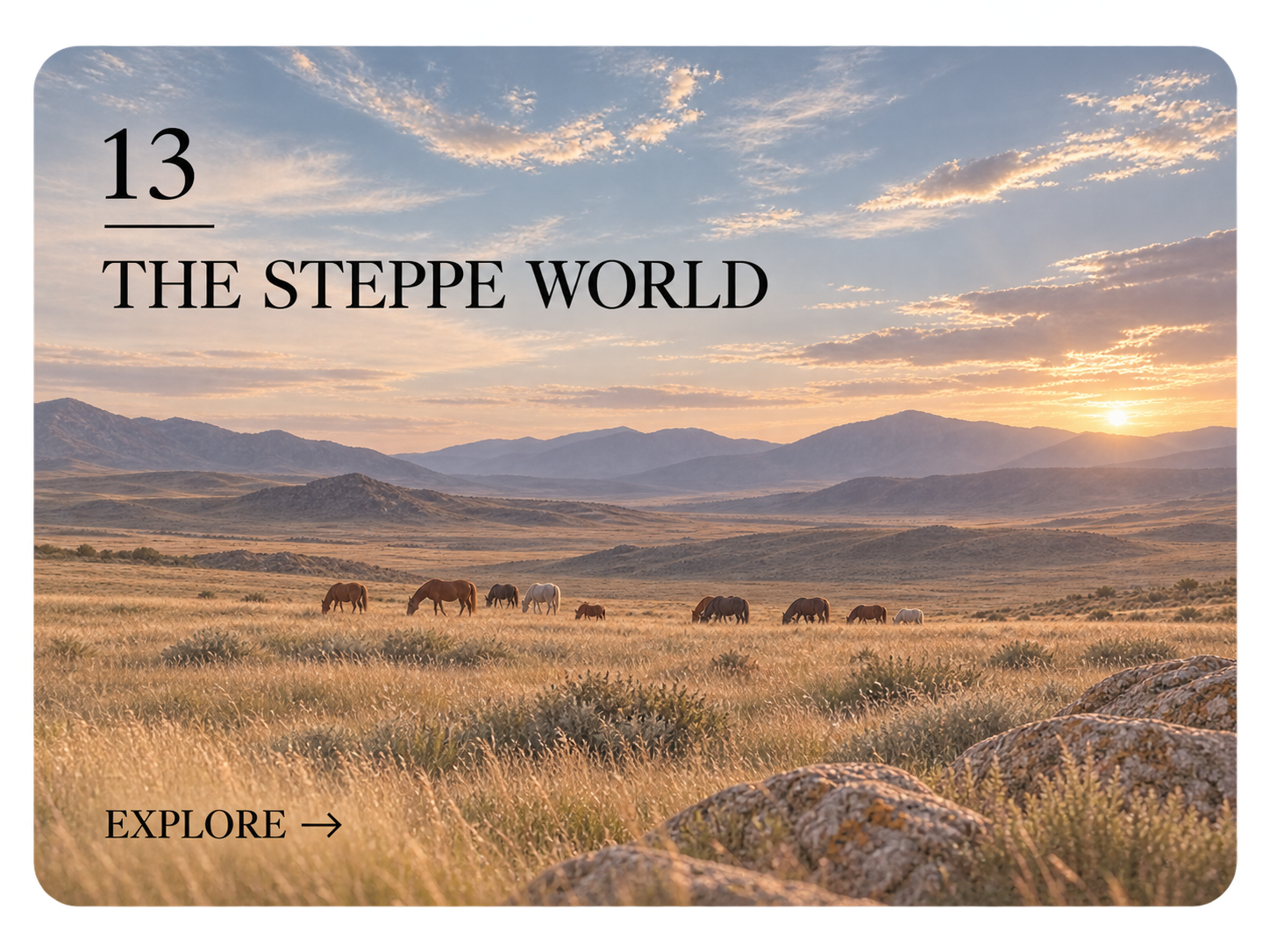
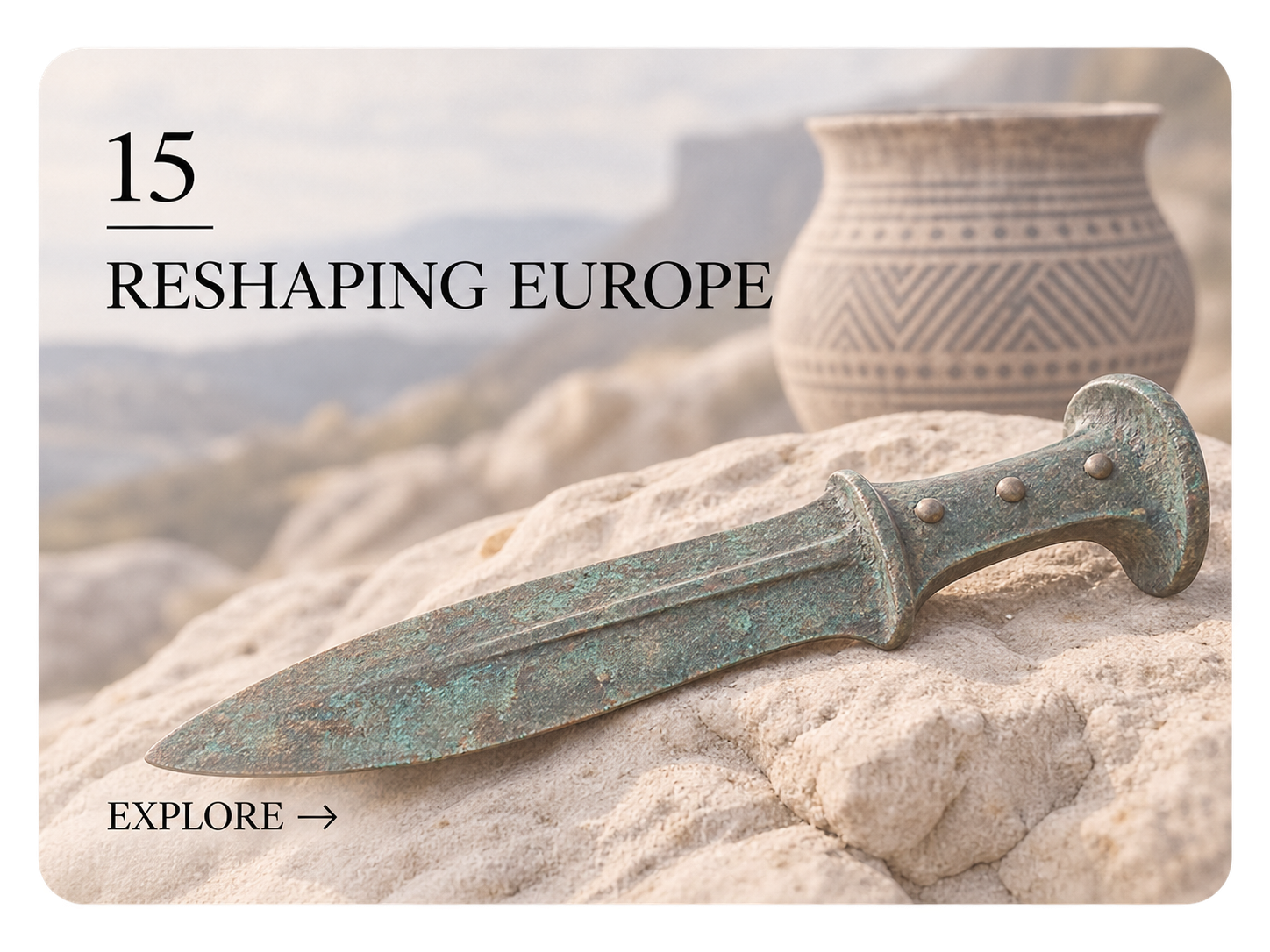
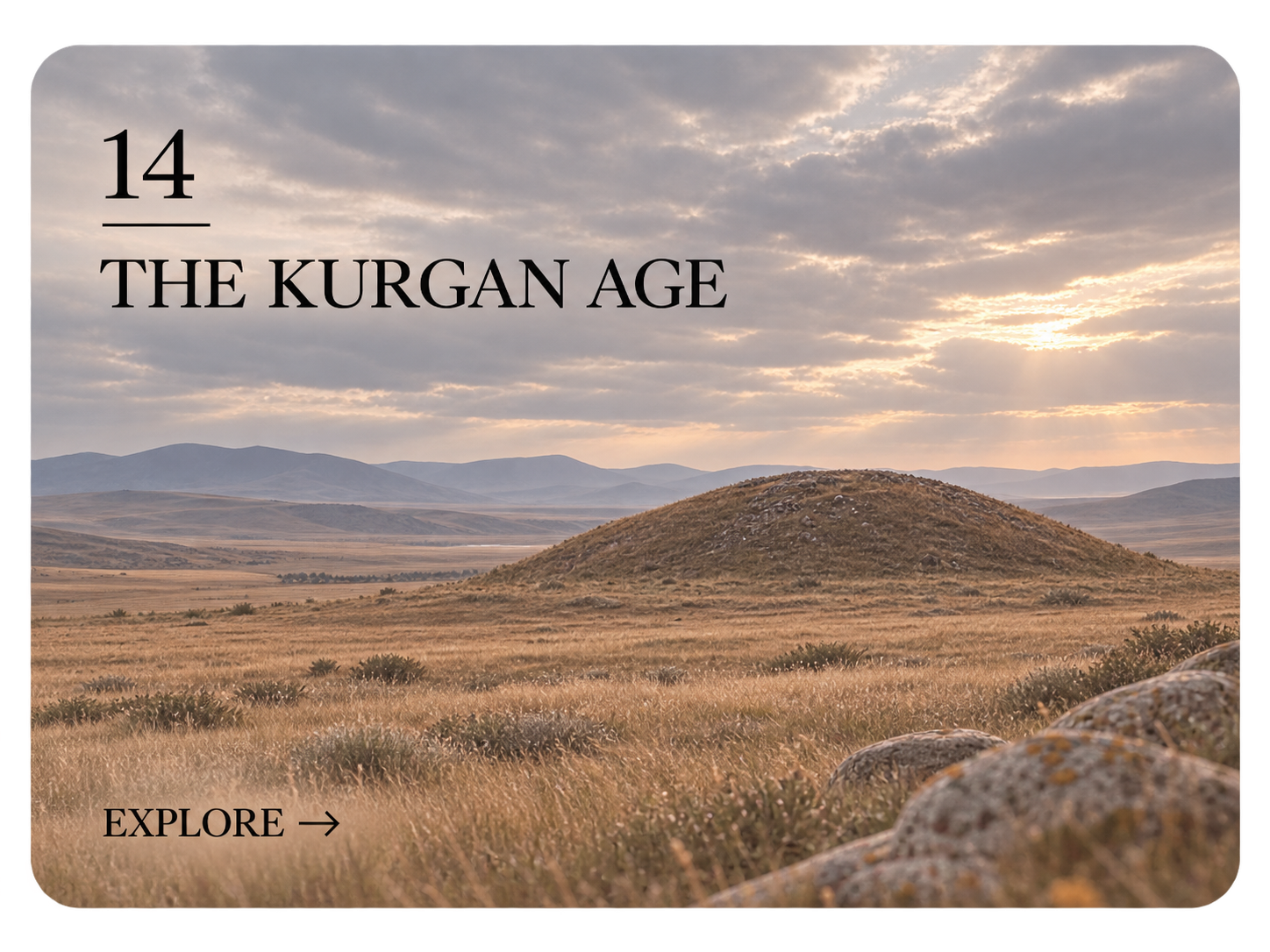
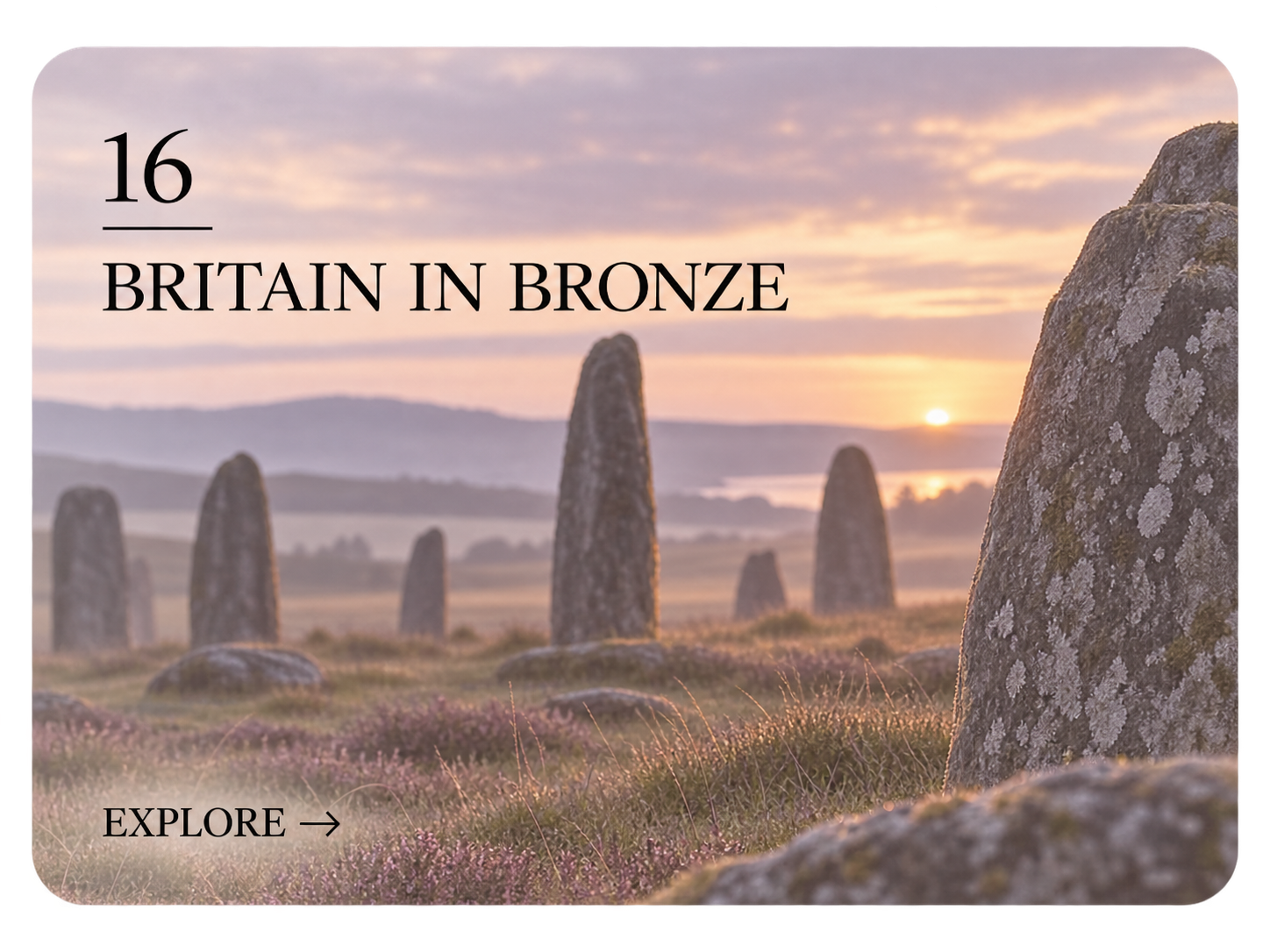
Steppe and Bronze Age Europe
5,000 - 1,100 years ago
New peoples and new technologies transform Europe far to the east, then reach Britain, changing its population, its landscape and its dead.
ERA 05
Rome to Present Day
2,800 years ago - Today
From Iron Age Britain through empire, invasion and the Viking world, this era follows the trail as it finally closes the distance to documented family history.